
Multinational Workforce Change: When Change Gets Ahead of Employee Relations
Multinational change programmes rarely become difficult because someone forgot that consultation exists. They become difficult because the organisation gradually starts behaving as though a preferred outcome is already settled, even while parts of that outcome still need to remain capable of influence.
That shift usually happens long before a formal process begins. Savings move from modelling into budget commitments. Implementation dates appear in programme plans. Leadership teams start organising around a future structure. Technology, finance, communications, and operations begin building dependencies around a design that is still being described internally as a proposal.
None of those steps necessarily represents a final decision in isolation. Collectively, however, they can create something much harder to unwind: organisational commitment to an outcome that may still sit within employee representative rights, consultation requirements, negotiation duties, or co-determination processes in one or more jurisdictions.
That is where multinational Employee Relations becomes difficult. The challenge is not simply identifying when consultation starts. It is understanding how far the organisation can move at each stage of a programme, what must remain open, which representative bodies have rights in relation to which decisions, and how all of that fits into a global transformation that is already trying to move.
A preferred position is not the problem
Organisations do not need to enter workforce change with no view of what they want to do. That is neither realistic nor commercially useful. Management should analyse the problem, assess options, model costs, and develop a preferred direction supported by a business case.
The harder question is what happens next. Has the organisation retained the practical ability to respond to the processes that still need to take place? Or has the preferred outcome become so embedded in budgets, milestones, leadership expectations, and downstream workstreams that changing it has become unrealistic, regardless of what the process formally says?
That distinction matters. A proposal can be highly developed and still genuinely be a proposal. Equally, something can continue to be called a proposal long after the organisation has started behaving as though it has already been decided. Experienced ER teams spend a great deal of time trying to identify where that line really sits.
There is rarely one decision in multinational change
One reason global programmes get into trouble is that they talk about "the decision" as though a restructuring has a single moment at which it moves from proposal to implementation. In practice, it usually does not.
A group may decide that costs need to come down, that a function should be consolidated, or that a particular operating model is commercially preferable. That does not mean every national structure, implementation step, contractual consequence, or employee-facing measure has also been decided. Different parts of the same programme may sit at different levels of determination at the same time.
A transnational direction may be set while local consequences remain subject to representative processes. A preferred structure may exist while parts of implementation remain open to works council consultation. Changes to terms and conditions may require negotiation even where the strategic rationale is not in doubt. Individual employment decisions may follow collective processes rather than collapse into them.
The useful discipline is to keep asking four questions: which decision is being taken, by whom, at what level, and what remains to be determined? Without that clarity, programmes start treating one decision as though it has settled a different one.
Consultation is only part of the picture
Another common problem is treating Employee Relations as shorthand for consultation. The real picture is broader. Depending on the jurisdiction, workforce, representative architecture, and subject matter, a programme may engage information rights, consultation requirements, bargaining obligations, co-determination rights, or combinations of these.
Different elements of the same transformation may trigger different obligations. Those obligations may sit at European, national, local, entity, establishment, or workforce level. Collective agreements and local practice can add further layers. Some aspects of the programme may engage no formal representative process at all, while adjacent parts clearly do.
That means the core question is not simply, "When does consultation begin?" It is, "What exactly are we proposing to change, which representative rights does that engage, and how should those rights shape the way the programme is governed?" Once you frame the issue that way, ER moves from being a stage on the timeline to being an input into programme and operating model design itself.
How programmes quietly become fixed
Workforce change programmes rarely become fixed through one obvious act. They become fixed through accumulation. A go-live date is agreed because another workstream needs certainty. A financial target is committed because the annual planning cycle demands it. A future leadership structure starts to take shape because succession decisions need to move. Technology teams begin configuring systems around the preferred model. Country teams start planning on the assumption that the global design will happen.
Each step can look reasonable on its own. Together, they can materially narrow the organisation's room for movement. By the time a formal representative process starts, the question may no longer be whether management is theoretically willing to listen. It may be whether the organisation has preserved enough flexibility to do anything meaningful with what it hears.
That is a governance issue, not a communications issue. Once key decisions, dependencies, and deadlines have been built around one outcome, the credibility of any later process can come under pressure even before anyone argues about the law.
Why sequencing becomes the dispute
This is also why disputes in workforce change often shift away from the business rationale and toward sequencing. The live argument becomes whether the organisation has already moved too far, whether participation rights have crystallised, what still needs to happen before implementation can continue, and whether communications or preparatory steps have already prejudged the outcome.
German case law provides a useful reminder of that risk. In a decision dated 6 January 2021, LAG Düsseldorf (4 TaBVGa 6/20) dealt with urgent relief sought in connection with alleged works council participation rights over a planned operational change. The employer succeeded on the facts, but the larger lesson is operational rather than tactical: once the parties disagree about where the programme has reached, litigation, delay, and representative conflict can become part of the restructuring itself.
The point is not that any particular preparatory step automatically prevents implementation. It is that once sequencing itself becomes disputed, the organisation can find itself managing litigation risk and representative conflict in parallel with the underlying restructuring.
Winning a dispute does not necessarily mean the ER strategy was successful. A programme can still lose time, lose flexibility, and damage relationships even where the final legal outcome is not an injunction. For multinational teams, avoiding preventable sequencing disputes is often as important as winning them.
The multinational challenge is a map of decisions, rights, and dependencies
A transformation affecting Germany, France, Spain, the Netherlands, and Poland cannot be reduced to five consultation timelines beneath one global programme plan. Different rights may attach to different parts of the proposal. Different representative bodies may have competence over different subjects. Some processes can run in parallel. Others create hard dependencies.
A European Works Council may have a role in the transnational aspects of a programme while national or local bodies retain competence over its country-level consequences. The European framework is built around that separation: European and national information and consultation processes are meant to be linked while respecting the competence of the bodies involved, and the practical sequence depends on the applicable EWC agreement and local implementation rather than on one universal timetable.
Even within one country, the analysis can vary by employing entity, establishment, employee population, representative body, collective agreement, and established local practice. Two businesses in the same jurisdiction can therefore face materially different ER requirements. Two elements of the same restructuring can do the same.
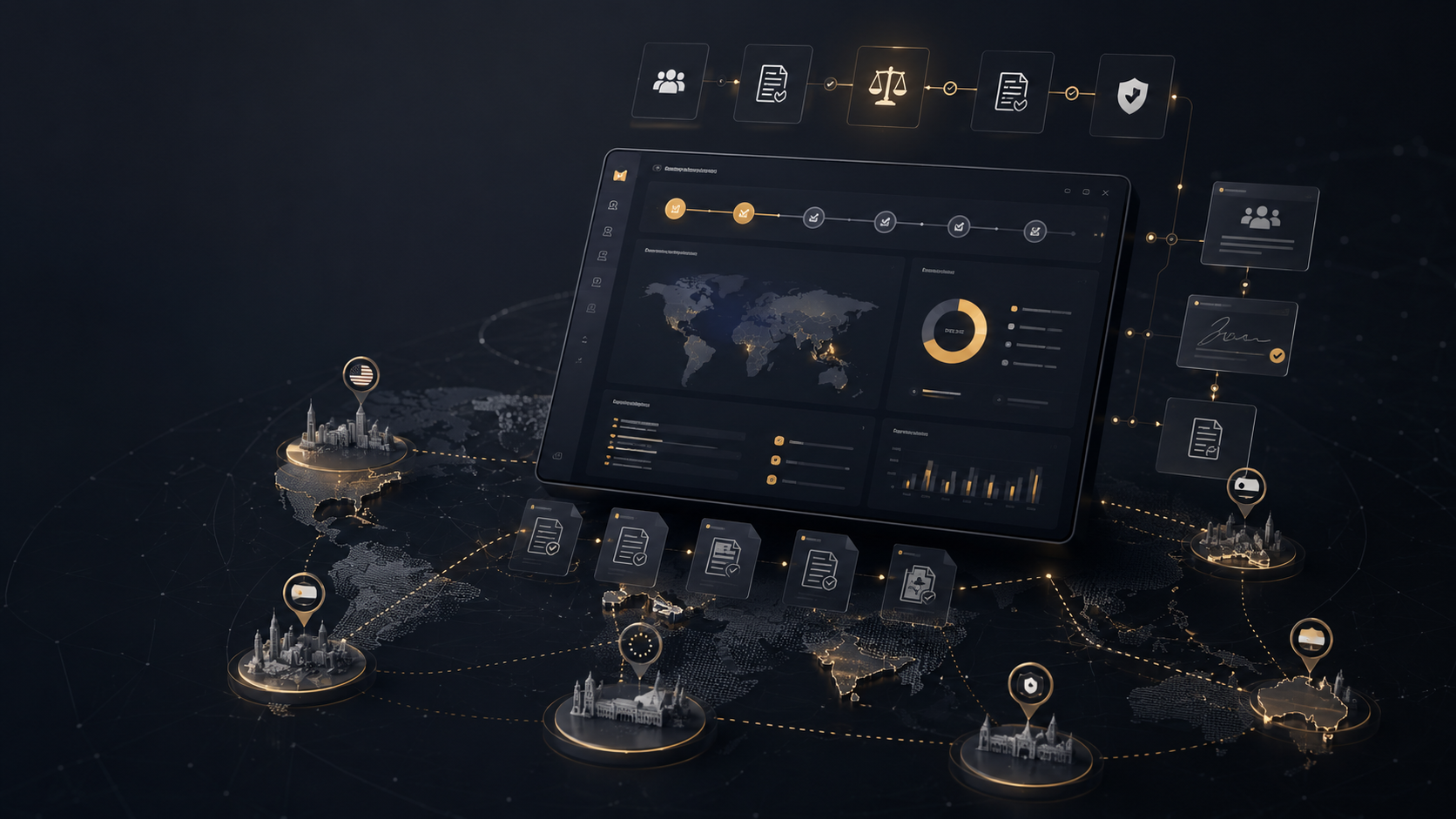
This is why effective multinational ER needs more than a country matrix. It needs a map of decisions, rights, and dependencies. What is changing? At what level is the relevant decision being taken? Which employees are affected? Which representative structure has competence? What form of engagement is required? What needs to remain capable of influence? Which other programme steps depend on the outcome? Those are the questions that determine how change can actually move.
The illusion of readiness
Multinational programmes often look ready long before they are ready. From a conventional project perspective, the signs are familiar: the business case has been approved, funding exists, leaders support the preferred model, implementation planning is underway, and communications are being prepared. Everything suggests momentum.
Employee Relations adds a different dimension of readiness. The question is no longer whether the organisation knows what it wants to do. It is whether the programme understands what it is currently entitled to treat as settled. Can the strategic direction be discussed while local outcomes remain open? Can one jurisdiction move while another process is still shaping the proposal? Could communications in one part of the business inadvertently prejudge a process somewhere else? Are milestones dependent on decisions that cannot yet properly be treated as final?
A programme that cannot answer those questions is not necessarily ready just because the project plan says it is.
What early Employee Relations involvement should actually do
The usual answer to this problem is, "Bring ER in earlier." That is true, but incomplete. Early ER involvement is not valuable merely because it happens sooner on the calendar. It is valuable when it helps the organisation understand the decision architecture before too many dependencies are built around it.
In practice, that means ER should be helping the programme identify:
- which elements can be decided globally and which cannot;
- where representative bodies may have rights to influence a proposal;
- where negotiation or co-determination may affect the eventual outcome;
- how transnational, national, and local processes interact;
- what can responsibly be communicated at each stage; and
- which actions could accidentally move the programme ahead of its ER position.
That is not ER slowing a programme down. It is ER helping the programme understand the conditions under which it can move without losing control of its own credibility.
Keeping workforce change governable
Strong multinational Employee Relations does not require every option to remain open indefinitely. It does not require commercial decision-making to stop while every local process runs. It requires something more disciplined: clarity about which decisions the organisation is making, which it is not, which representative rights attach to them, and how processes across jurisdictions interact.
The goal is to avoid building so many commitments around a preferred outcome that processes intended to influence that outcome become difficult to conduct credibly. That is the difference between a programme that merely has ER activity and a programme that has ER governance.
The first asks how consultation fits into the plan. The second designs the plan with the ER environment already understood. In multinational workforce change, that distinction often determines whether ER helps deliver change or becomes the point at which the organisation discovers that the programme has already moved further than it should.
Graylark gives ER, HR, and legal teams one governed place to map representative structures, active consultation processes, decision points, and cross-country dependencies before a programme drifts out of control.
See how Graylark supports workforce change governance